Just One MoreFarms
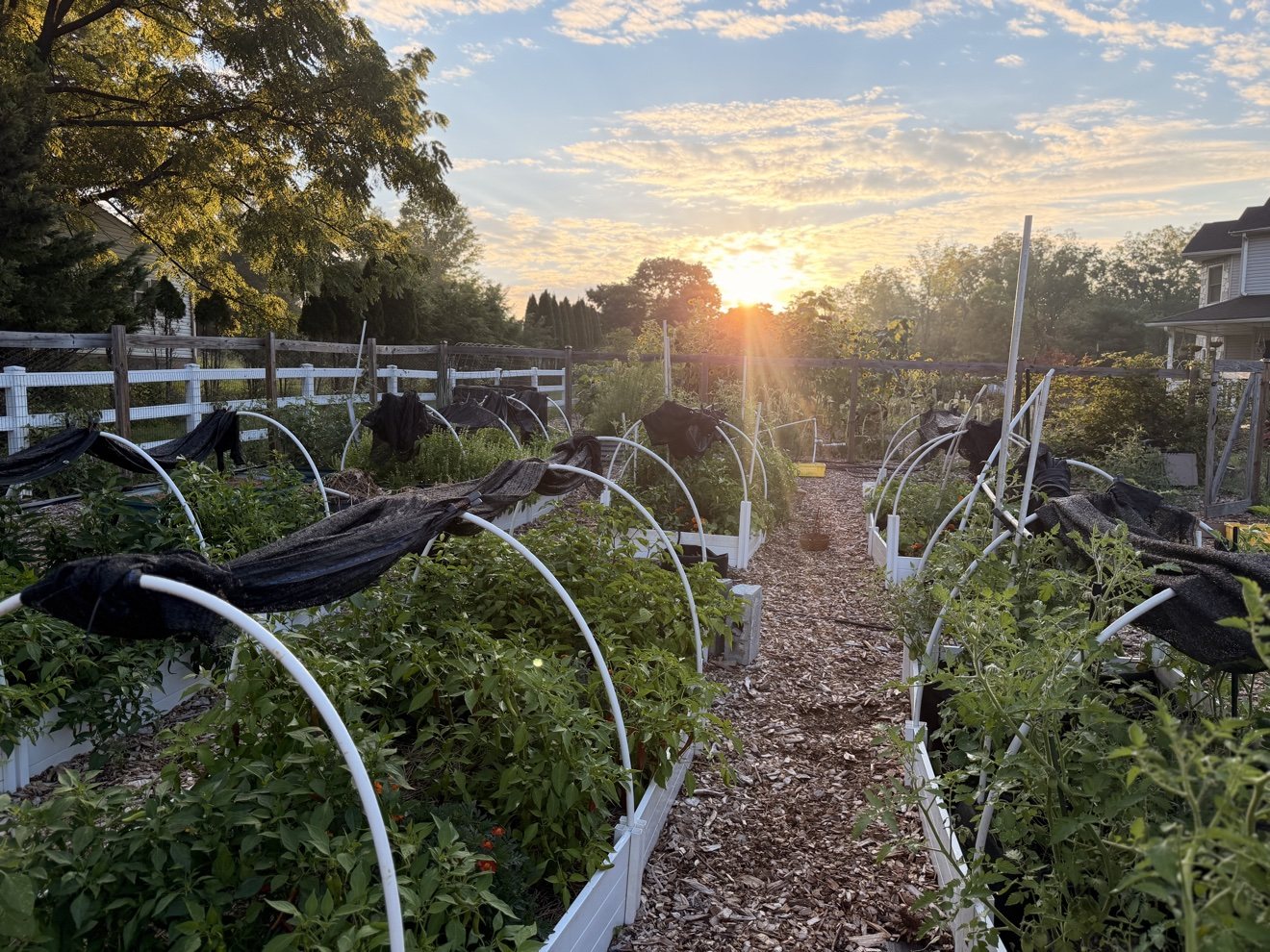
Sunrise over garden beds lined with hoop supports and shade cloth
Morning over the beds

Every discovery invites one more.

Gardening, making, gathering & paying closer attention. Building Just One More Farms as we go.

A place to look closer

We started with three acres and a lot of questions. We keep finding more.

What happens if we stop mowing this? What is already growing here that we haven’t been paying attention to? Could we repair this instead of replacing it? Why are we growing this here? What happens if we try it another way?

Just One More Farms is where we follow those questions.

We grow food and flowers. We restore parts of the land and make room for wildlife. We make things, repair things, learn old skills and experiment with new ones. Some ideas work beautifully. Some absolutely do not. Usually, either outcome gives us another question.

We’re not trying to go backwards or pretend modern life doesn’t exist. We’re figuring out what is worth keeping, what we’ve forgotten and what happens when we pay a little more attention to the world already around us.

Every discovery invites one more.

Seen around the farm

The work is real. The photographs should be, too.

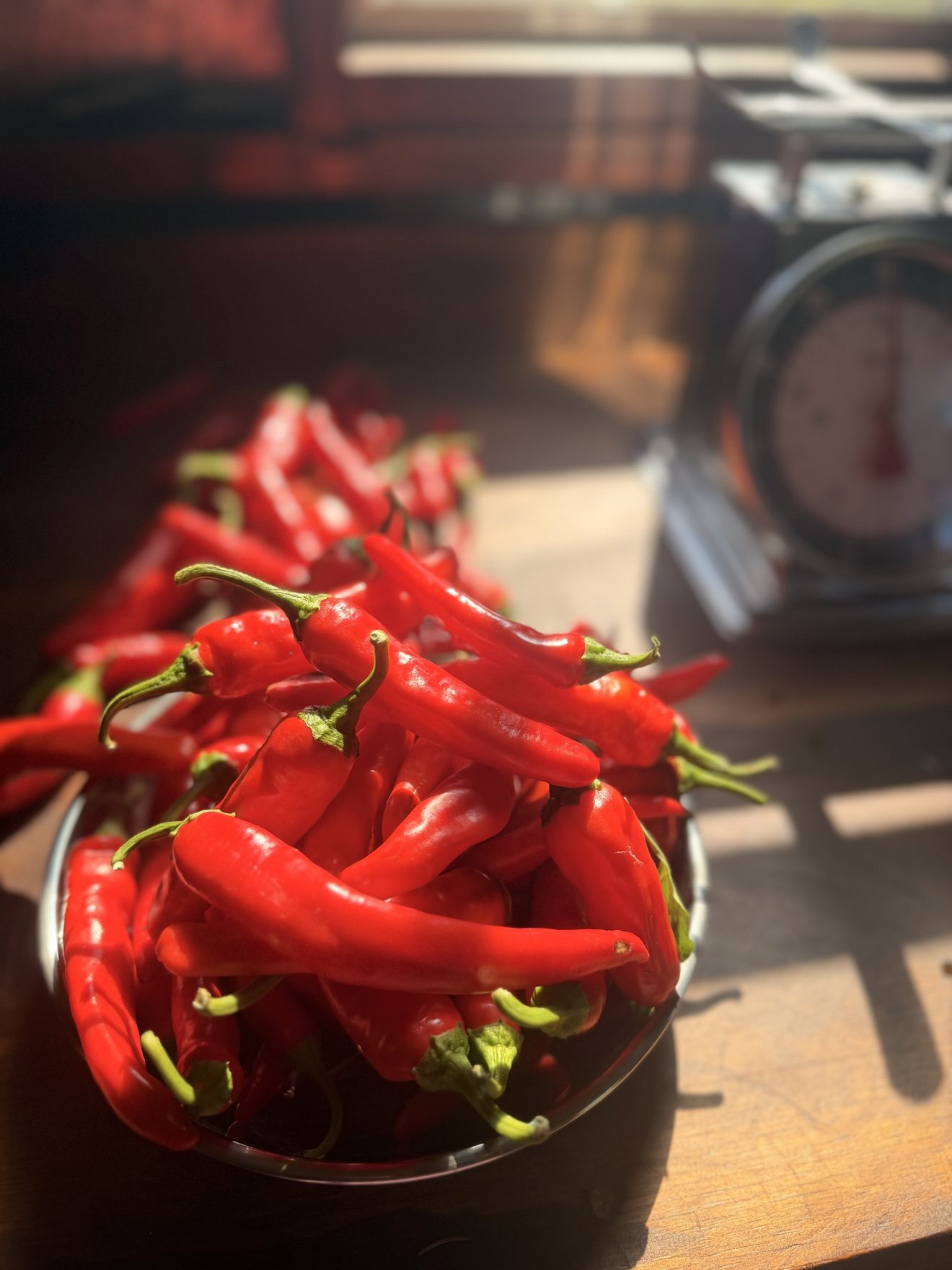
A sunlit bowl overflowing with freshly picked red chilies
The pepper patch went full inferno.
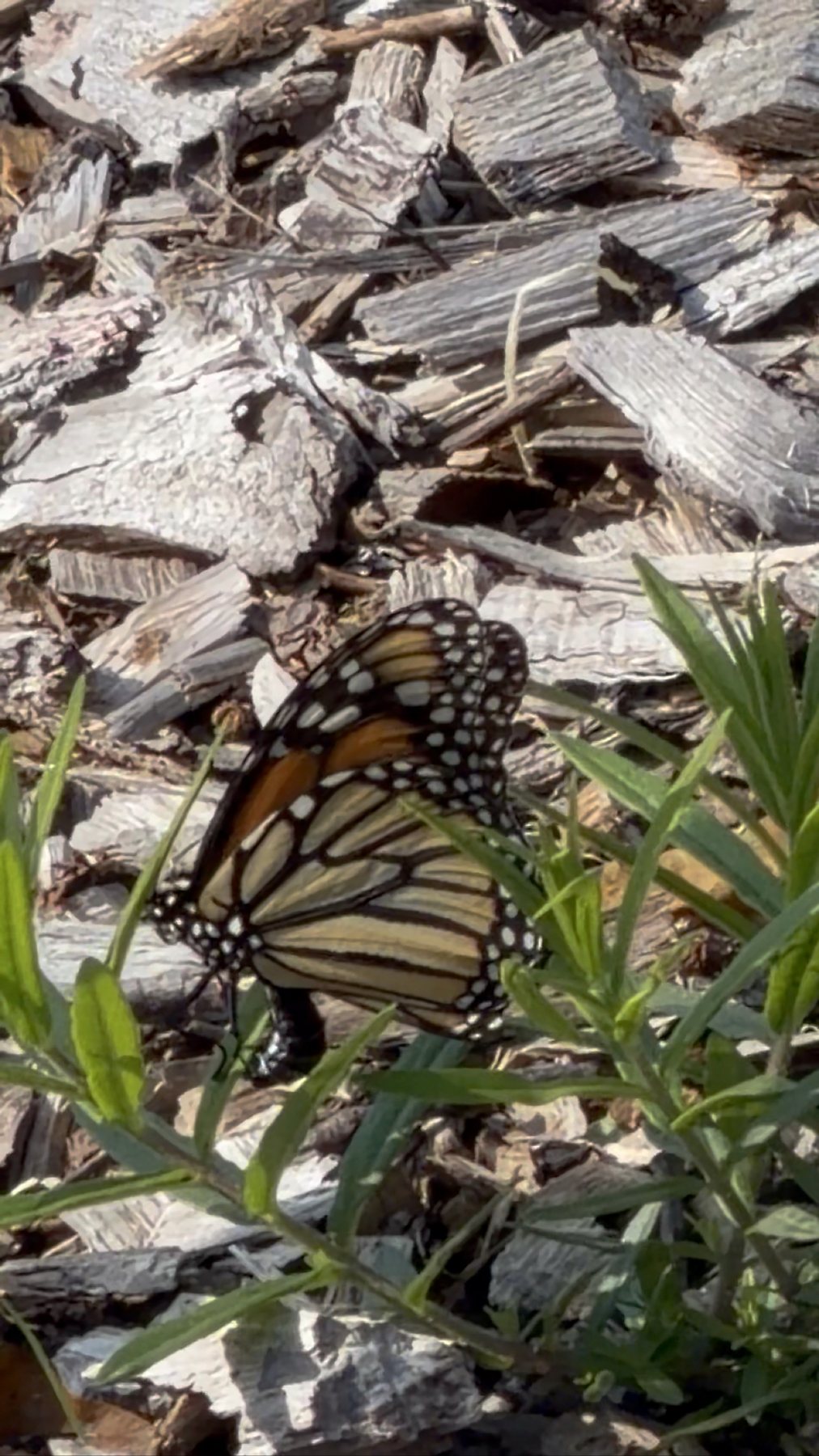
A monarch butterfly resting among grass and wood mulch
Leaving the next generation behind.
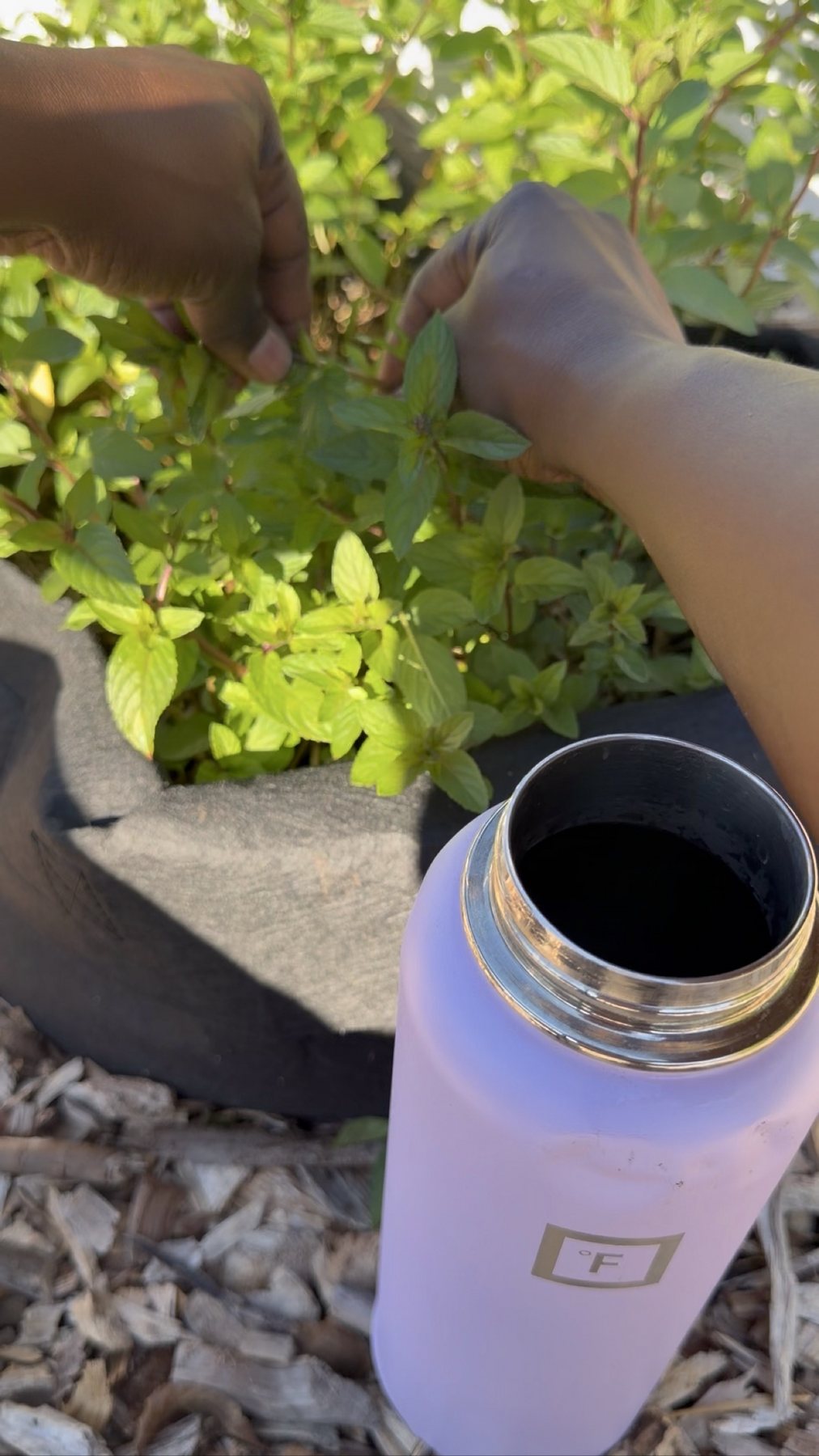
Hands picking mint from a fabric garden pot
Does not get much fresher than this.

What we are working toward

Restore stewardship to gardening.

A garden can feed people without forgetting the rest of the living system.

Bring gardens back into everyday life.

No grand acreage or expensive equipment required. Start where you are, with what you have.

Bring wonder back into everyday life.

Not as decoration. As the plain result of noticing what was already there.

Look closer. Try something. Learn something. See where it leads.

Field Notes

Not instructions from a finished farm. Notes from one in progress: what we tried, what we noticed, what failed and the question that followed.

The Just One More Way

Not a set of rules. Simply a practice of staying curious, questioning what we think we know and making room for unexpected possibilities.

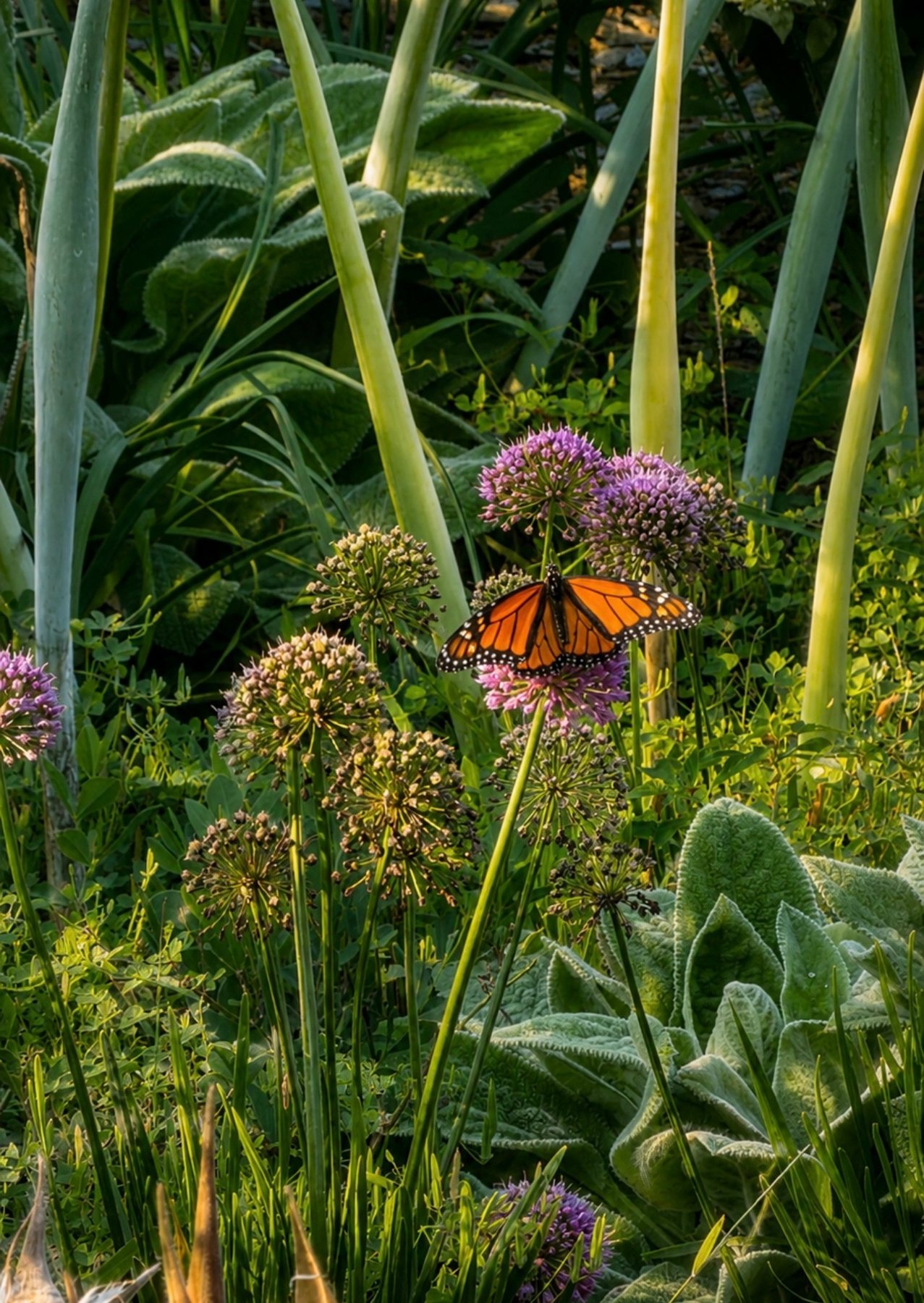
A monarch butterfly on purple allium in warm evening light
The farm, doing what it does.

The meaning

One discovery has a way of creating another.

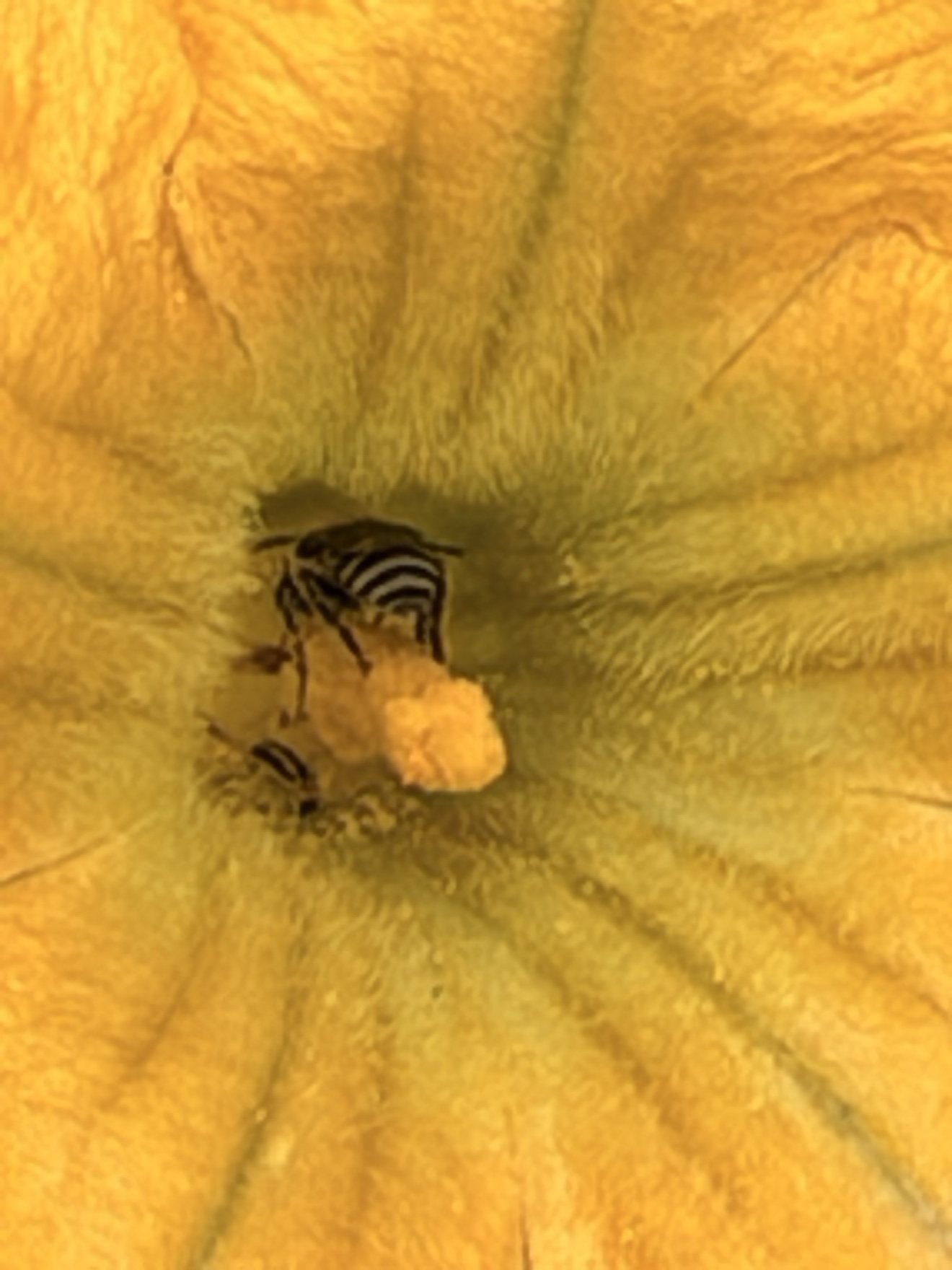
We notice a bee we have never seen before and want to know what it is. Learning what it is makes us curious about what it eats, where it nests and what else lives alongside it. Before long, one small observation has changed the way we see an entire patch of land.

That is what “just one more” means to us. One question becomes another. One skill makes another seem possible. One experiment changes how we think about the next. It is not about doing or collecting more. It is about giving curiosity enough room to take us somewhere we did not expect.

Walking the line

We are not trying to abandon modern life. We are trying to choose it more carefully.

Old does not automatically mean better. Neither does new. We are interested in understanding what we gain and what we give up with either choice.

Sometimes the old wisdom holds. Sometimes the modern process prevails. Sometimes the best answer is a hybrid of both. The point is having enough knowledge to choose rather than simply accepting the default.

A different way of seeing

We don’t have all the answers. But examining our assumptions has proven far more useful than holding onto them.

Now, the questions shaping how we live, grow, make and explore include:

  1. What have we accepted as normal simply because it's the way things are done?
  2. What might we discover if we paid closer attention before trying to change something?
  3. What changes when we see ourselves as part of nature rather than separate from it?
  4. What knowledge have we left behind in the pursuit of convenience and progress—and what is worth bringing forward?
  5. Could we grow it, make it, mend it or give something old an entirely new life?
  6. What if usefulness, beauty, play and a little magic weren't things we had to choose between?
  7. Is this making life richer, or simply faster, “convenient” and unnecessarily complicated?

We’re learning to pay closer attention to the world around us—and discovering how much our perspective shifts when we do. As it turns out, our reality is full of wonder if we just slow down to look.

About Us

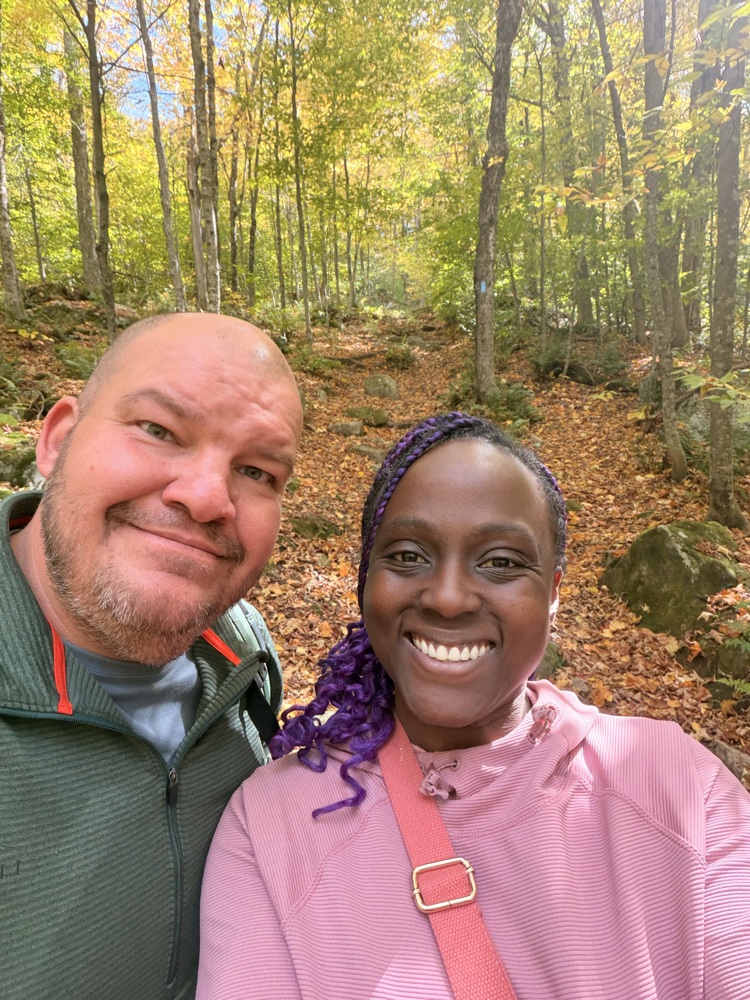
We’re Jerneice and Aaron—partners in life, business and a growing collection of projects that usually begin with one of us saying, “What if we tried…?”

Jerneice and Aaron smiling together on a wooded trail in autumn

Our story

Jerneice spent two decades in complex corporate finance—building teams, transforming operations and driving cross-functional strategic initiatives. Today, she brings that same knack for systems, strategic vision and intentional design to building the backbone and philosophy of Just One More Farms. Aaron has spent over two decades in the kitchen, starting at age ten on a milk crate in a local pizzeria before working his way up to Executive Chef at fine dining restaurants, taverns, and golf courses across Pennsylvania. As the central force behind HolmeStyle Foods, which we’ve operated from our property since 2022, Aaron brings deep practical expertise, creativity and hands-on craftsmanship to every corner of the farm.

We live on three acres in Royersford, Pennsylvania, where what started as a kitchen garden has gradually become something much bigger. We’ve planted hundreds of trees, traded stretches of lawn for wildflowers, expanded our food gardens and made room for the wildlife whose habitat was here long before us. There’s a botanical crafting studio taking shape, a seemingly endless list of things we want to learn to make and usually another project waiting in the wings.

In August 2026, we finally gave this evolving place a name: Just One More Farms.

But this isn’t really a story about starting a farm.

It’s about changing how we see and interact with the world around us. Growing food for its flavor, not just its yield. Learning old skills without rejecting modern conveniences. Making, repairing and repurposing, rather than automatically buying something new. Recognizing that a garden is an ecosystem, not an outdoor factory—and that we’re participants in it, not its masters.

We take the work seriously, but ourselves considerably less so. There are experiments that succeed, plenty that don’t and more ideas than any two people could reasonably finish in a lifetime.

And we’re perfectly fine with that.

Because around here, every discovery invites just one more.
← All Field Notes
Field Note 01

Why “Just One More”

The name did not arrive as a mission statement. It earned itself.

A bee dusted with pollen inside a yellow squash blossom
Field Note 01 A whole world inside one flower.

There was never one singular moment when we looked across the property and said, “This will become Just One More Farms.” One project led to another. One question led to five more. Somewhere along the way, we realized that “just one more” had become a pretty accurate description of how we do almost everything around here.

We planted one thing, then learned it would do better with another nearby. We went outside to water and stayed to watch an insect we had never seen before. A small garden question turned into hours of research, an experiment and, almost inevitably, another question.

“Just one more” is also how you end up with hundreds of trees when you were going to plant a few. Or walk outside to do one thing and come back three hours later having done six completely different things — none of which was the thing you went outside to do.

Underneath the running joke is something we take seriously: curiosity has momentum. The closer we look at one thing, the more we notice everything connected to it.

That changed how we saw these three acres. There was already a whole world here doing its thing. Birds nesting. Insects feeding. Plants appearing where we had not put them. Soil changing beneath our feet. We began asking not only what we wanted to grow here, but what was already happening and what might happen if we worked with it instead of constantly trying to control it.

That is also why calling this a farm has never quite explained what happens here. Yes, we grow a lot of what we eat. But we also plant for wildlife, turn lawn back into habitat, make and repair things, save seeds, preserve what we grow and learn old skills alongside useful modern ones. We are as likely to disappear down a rabbit hole about soil life, an old piece of furniture or a nearly forgotten vegetable as we are to start another garden bed. To us, it is all connected.

There is no polished master plan. One patch changes and teaches us something about another. A project succeeds and creates new questions. A project fails and, fortuitously, leads to even better ones.

There is something manageable about “one more,” too. We do not need to understand the whole property before learning one corner of it. We can follow one question, make one thing, restore one patch or notice one creature we had never paid attention to before.

“Just one more” is not a demand to do everything. It is an invitation to stay with the interesting thing a little longer.

Look closer. Try something. Learn something. See where it leads.

Next: An Ecosystem, Not an Outdoor Factory

← All Field Notes
Field Note 02

An Ecosystem, Not an Outdoor Factory

The garden got more interesting when we stopped treating every unplanned life as an interruption.

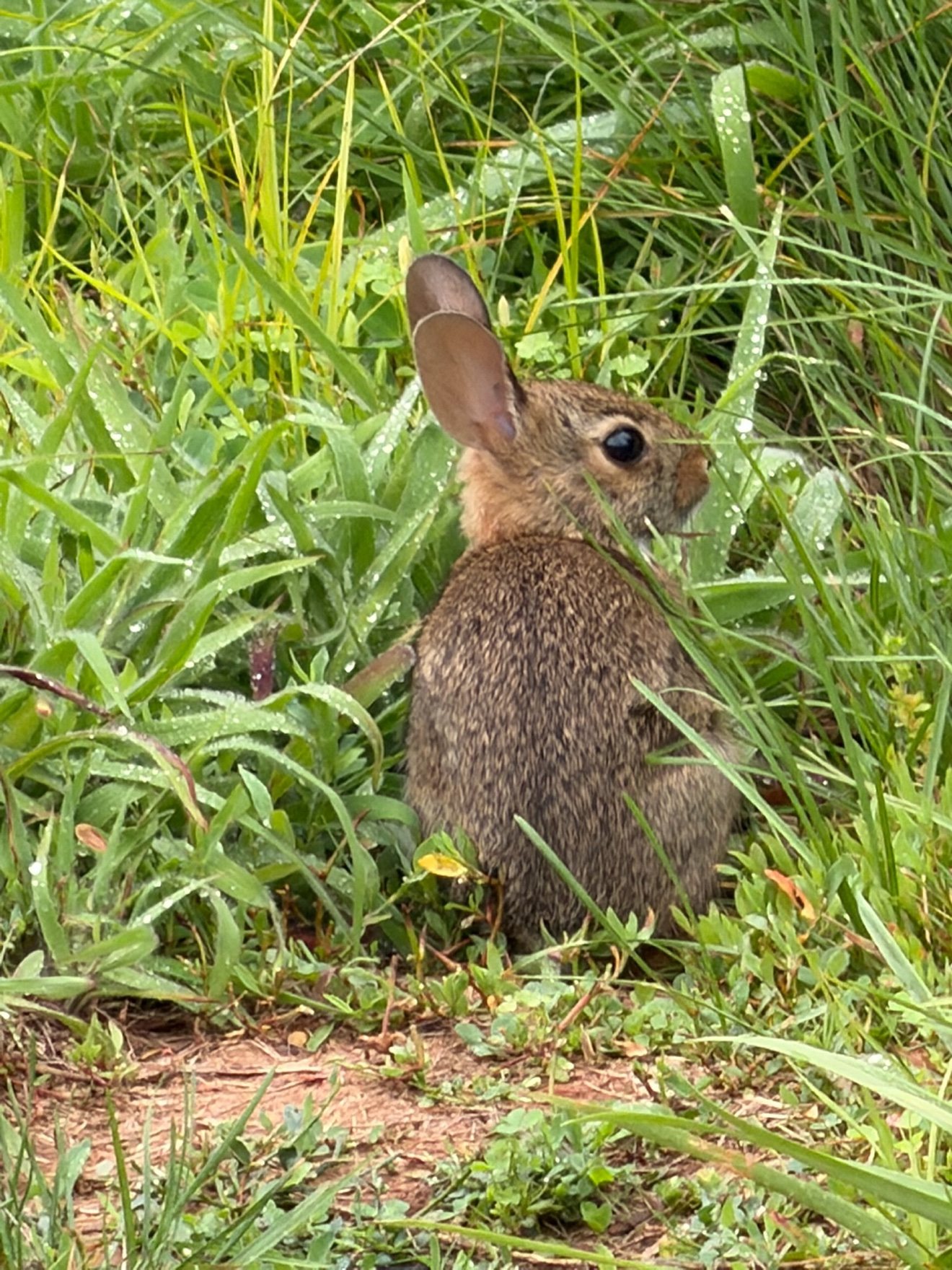
A young rabbit sitting in dew-covered grass
Field Note 02 The garden’s other residents.

We thought we were taking care of the garden. We watered. We fertilized. We treated insects we considered pests. If something was wrong with a plant, there was usually a product promising to fix it. Unknowingly, we were creating food deserts with detrimental impacts to the soil, insects and wildlife around us.

We had defined the garden far too narrowly. We were taking care of what we planted. But what about everything else that lived here?

Where did the birds get water? What did insects eat before our flowers bloomed or after they finished? Where could something shelter, nest or overwinter? And if we fenced the groundhogs and rabbits out of the vegetable garden, where were they supposed to eat instead?

Animals don’t have refrigerators. They eat what they can find today so they can make it to tomorrow and, hopefully, long enough to raise another generation. Simply keeping them away from the food we wanted began to feel insufficient, heartless and unnecessary.

So we started making room for theirs.

The formal garden has boundaries. The radishes and kale inside the fence are intended for us. But elsewhere, we can grow food for the creatures sharing these three acres. We can provide water, plant host plants and flowers across the seasons and leave places to shelter, nest and overwinter.

Stewardship does not mean surrendering everything we grow. It means recognizing that our needs are not the only needs the land is capable of meeting.

A healthy garden, to us, is one of balance. The soil builds the plants. Plants host caterpillars, whose frass returns nutrients to the soil. Nesting birds take caterpillars to raise their chicks, while the survivors become moths and butterflies that pollinate plants and feed bats. Birds also keep insects in check, spread seeds and return nutrients to the soil.

So when something begins taking too much, our first question is increasingly not, “How do we kill it?”

It is, “What is out of balance?”

Sometimes we need to intervene. Other times we need more predators, more diversity or simply enough plants that one hungry population cannot overwhelm them.

We still protect crops and manage plants and insects when the balance tips too far. The goal is not to remove ourselves from the equation. It is to stop behaving as though we are the whole equation.

That has changed what productivity means here. A basket of vegetables counts. So does a wildflower meadow providing food and cover. A sunflower left standing for birds counts. Water where there was none before counts. Finding evidence that wildlife chose these three acres to raise its young definitely counts.

Not every harvest comes into the house. A good portion of what grows here is claimed by feathers, paws and burrows—just as it was meant to be.

We are not trying to grow food despite the ecosystem.

We are trying to grow food within one.

Next: Walking the Line

← All Field Notes
Field Note 03

Walking the Line

Between old knowledge and new tools, there is a useful place to stand.

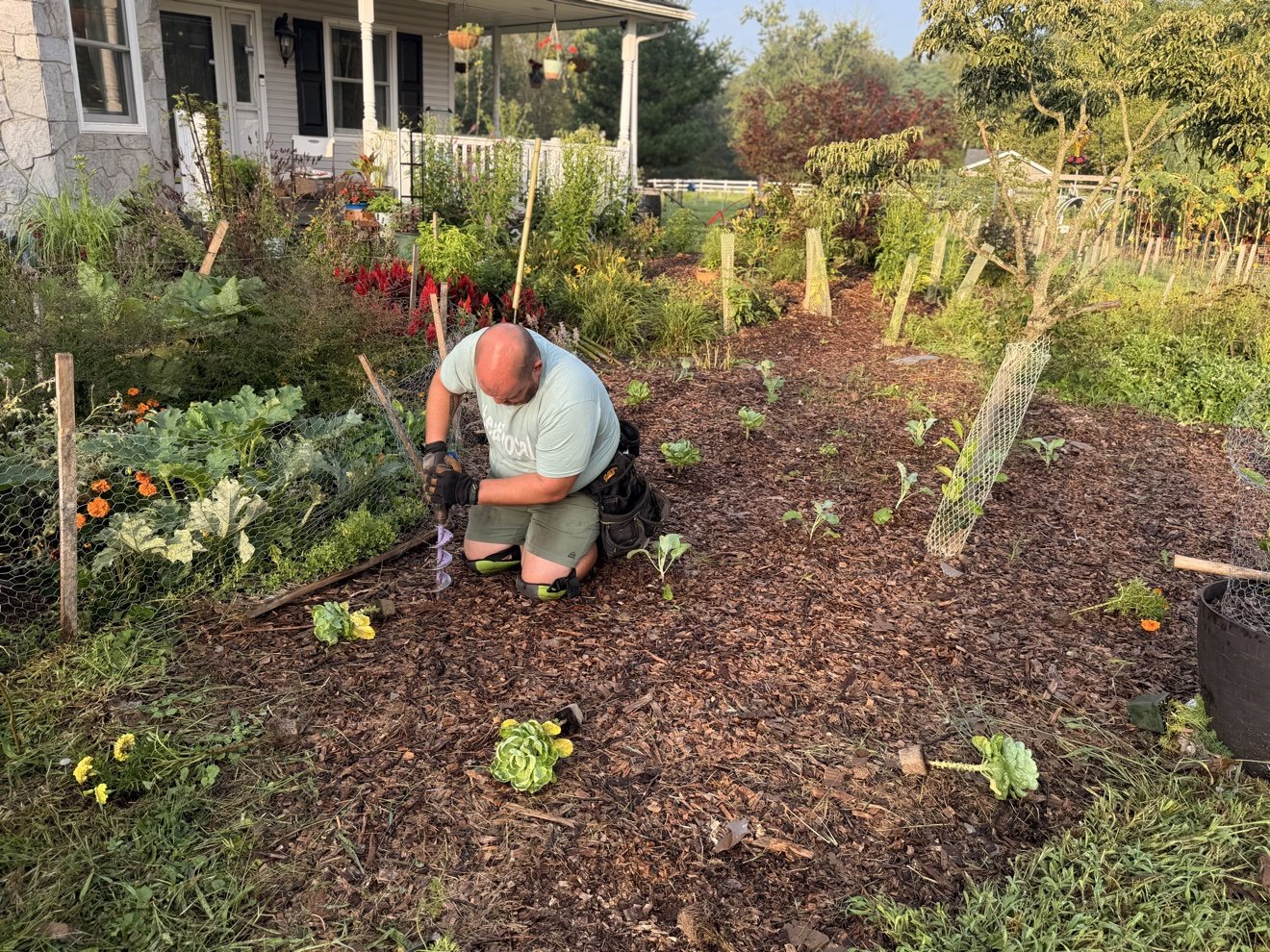
Planting young vegetables with a power auger in a mulched garden bed
Field Note 03 Old work, new tools.

Modern life has made an extraordinary number of things easier and plain better.

Food lasts longer. Machines spare our bodies hours of labor. Medicine saves lives. Technology can monitor a greenhouse while we sleep, tell us when rain is coming and help us learn in an afternoon what might once have taken years to find.

We have no desire to give that up.

But convenience is rarely free.

Food can be made to last for months, but only with processing and noxious additives. Cheap objects promise easy convenience, only to become non-recyclable trash that pollutes ecosystems and destroys habitats. A 'smart' tool performs its magic beautifully—until the app dies, the subscription hikes, or the company abandons it. In saving time, we quietly surrender our understanding of how things actually work.

Older ways come with costs, too.

Older preservation methods require time, labor and skill. Hand tools require more effort. Repairing something can take considerably longer than replacing it. Traditional methods are not automatically safer, wiser or better simply because they are old.

That is the line we are interested in walking.

We want to understand what we gain and what we give up with either choice.

We can and ferment when off-grid shelf stability matters. We freeze when speed, raw flavor, and an effortless process matter most. We save seeds for the independence it affords—lowering costs, building resilience, and connecting us to our harvest. We rely on power tools because hard labor for its own sake holds no special wisdom. We repair what we can and replace what has truly run its course.

The goal is not self-sufficiency. It is not nostalgia. And it certainly is not making life harder for the satisfaction of saying we did it ourselves.

It is being able to make a useful choice instead of accepting the default one.

What are we eating, and where did it come from? What did its convenience cost? Can this be repaired? Could we craft it ourselves—and would that actually make it better? Is this technology serving us or just adding noise?

Sometimes the old wisdom holds.

Sometimes the modern process prevails.

Sometimes the best answer is a hybrid of both.

That is where we want to live: informed enough to choose the most seamless option that honors our values, keeps us present, and leaves room for balance, wonder and play.

Next: What Can We Make Instead of Buy?

← All Field Notes
Field Note 04

What Can We Make Instead of Buy?

A useful question, provided we do not turn it into a competition.

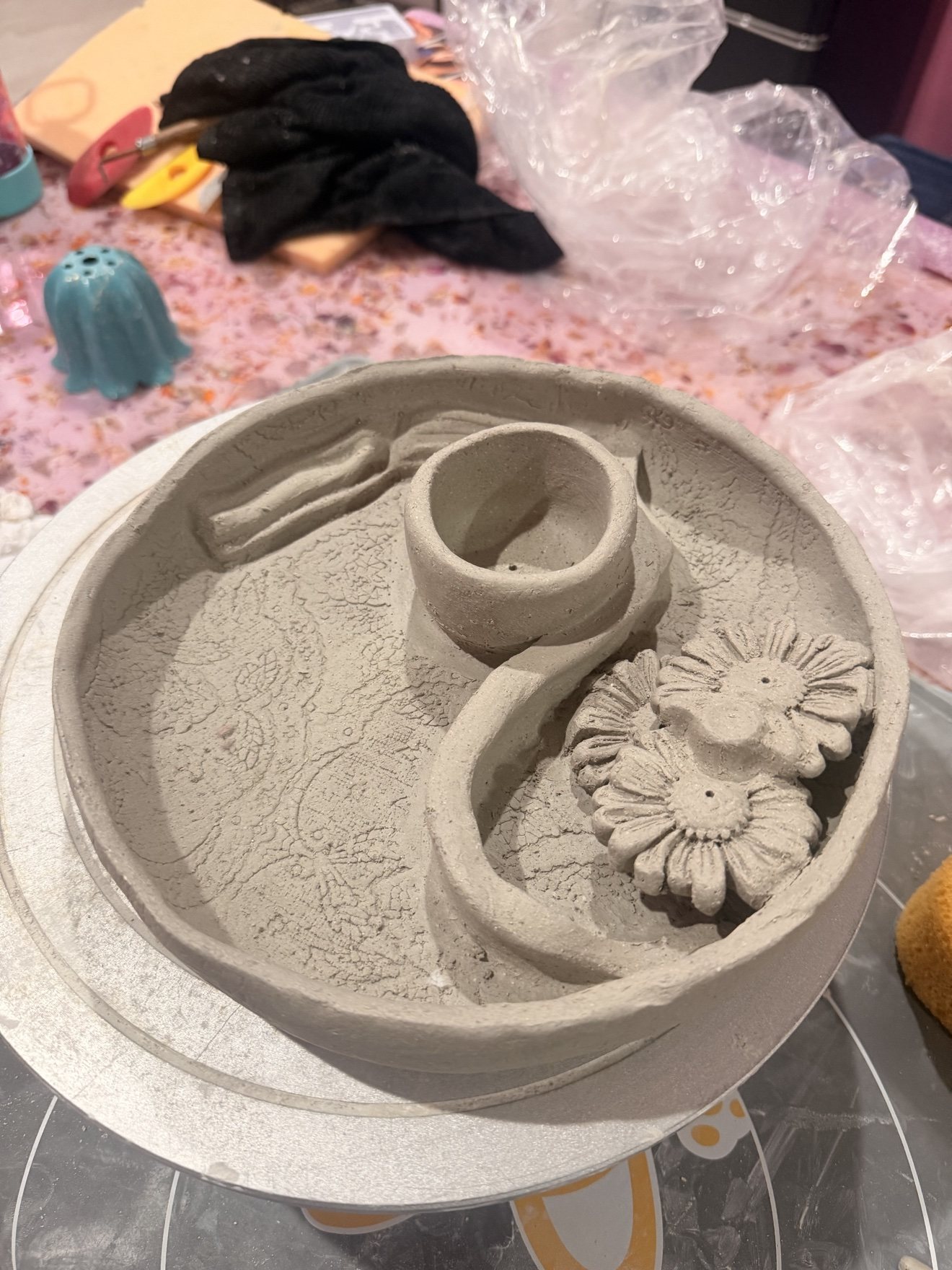
An unfired clay tray with sculpted flowers and tools on the worktable
Field Note 04 — Water station for birds, small mammals and insects, in progress.

Sometimes the honest answer is “nothing sensible.” We don’t believe every household object needs to begin with an ambitious afternoon and an online tutorial. Buying new, when done thoughtfully, can often be the better decision.

The trouble begins when buying becomes the only decision we know how to make.

As we embarked Just One More Farms, we started changing the order of our choices:

  1. Use what we have.
  2. Repair what is repairable.
  3. Repurpose with intention, while learning to let go of what no longer serves.
  4. Buy secondhand when it makes sense.
  5. Make something when the process adds value, saves costs or simply bring joy and fulfillment.
  6. And when we buy new, choose durable objects with a long future.

This isn’t deprivation. It is a surprisingly abundant way to live.

Asking what we can make has led us to newspaper seedling pots, repaired furniture, garden structures built from what the land provides, preserved food and a few experiments that strictly do not deserve a sequel.

Making also exposes what finished products hide. Sew something and you begin to understand tension, fabric, and why a seam fails. Build a garden structure and you quickly learn how wind tests a joint, how frost shifts a footing and how rain always finds the flaw. Preserve a harvest and ripeness, timing and waste become impossible to ignore.

The failures teach us about materials, processes and our own limitations. The successes strip away the "ordinary" and show us how much possibility is tucked into everyday things.

Objects we once viewed only as finished products suddenly become things that can be understood, repaired, altered or made again. That may be the most valuable yield of all—not the object itself, but the knowledge that buying another one was never our only option.

Of course, making can easily become its own brand of consumption—specialized tools, stacks of supplies and a new purchase for every new craft. We aren't immune. The real question is whether the effort leaves us with something durable, useful, better understood—or simply more stuff.

Next: More Life, No Lawn

← All Field Notes
Field Note 05

More Life, No Lawn

The first lesson in not mowing was that the ground had plans of its own.

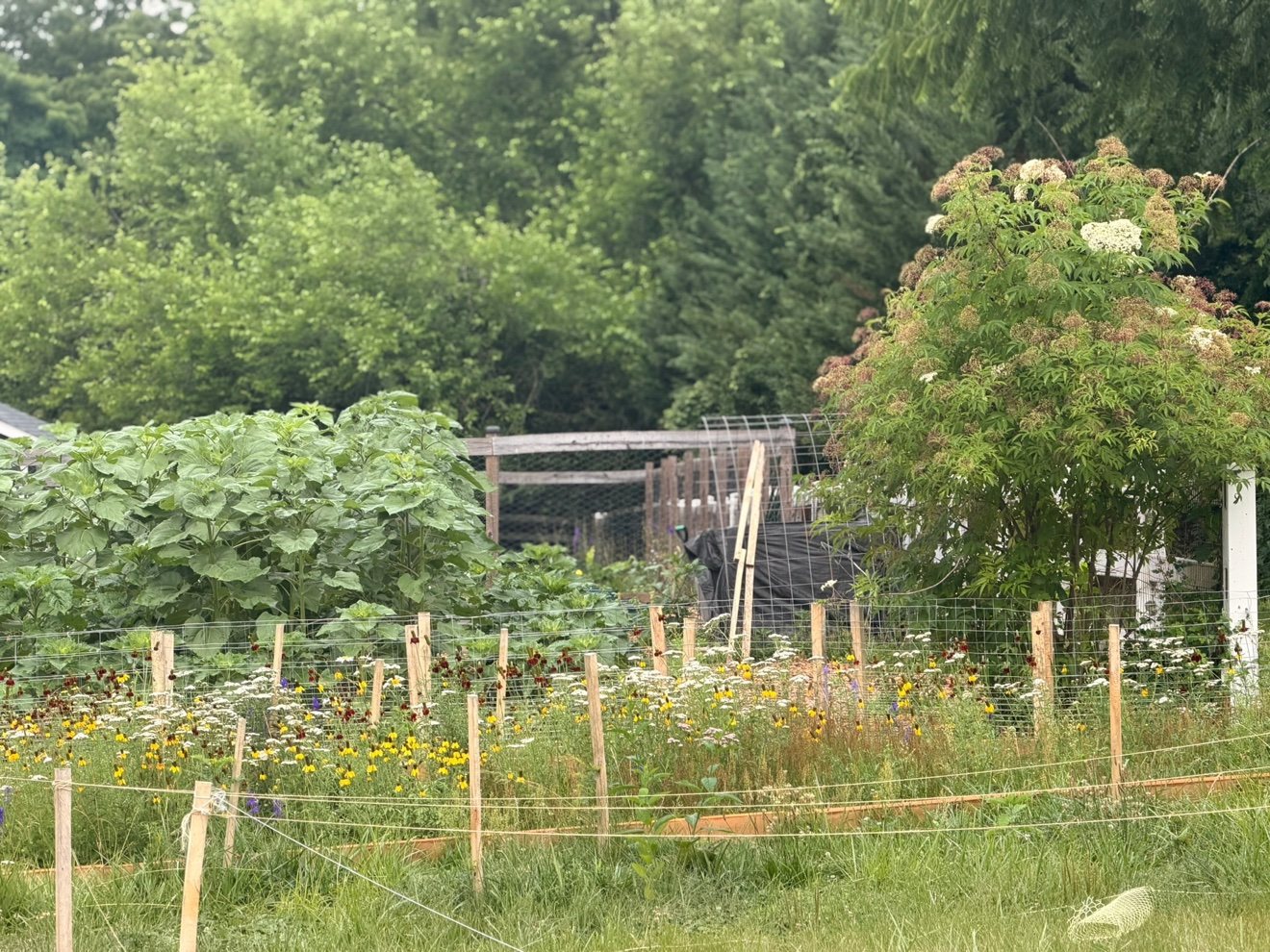
A wildflower meadow strip growing along the garden fence
Field Note 05 Where the mower stopped.

Lawn is very good at looking finished.

Mow it, trim the edges, and for a few days the work is obvious. Everything is roughly the same height, the boundaries are clear, and nothing appears to be happening that was not invited.

For a long time, we accepted lawn as the default landscape around a home. Then we started paying attention to what that landscape was actually doing.

Not much.

A conventional lawn is essentially an ecological desert: acres of nearly identical plants repeatedly prevented from flowering, producing seed or developing the structure wildlife needs. It offers little food or shelter, and its shallow roots do far less to build soil or absorb water than the deeper, varied root systems of native grasses and other plants.

Keeping that ecological desert looking lush requires us to continually override the processes trying to happen naturally. We add manufactured fertilizers to force growth. We apply herbicides when other plants appear. We spray insecticides and fungicides the moment insects and fungi arrive. We irrigate when rainfall falls short.

And none of those interventions happens in isolation.

Fertilizers, herbicides and pesticides detrimentally affect our waterways and the organisms that depend on them through runoff. We use chemicals designed to kill or suppress living organisms, then wonder why fewer organisms can live there—and why our own health seems to suffer right along with the soil. Maintaining acres of ornamental turf also requires enormous amounts of water for relatively little ecological return.

That is increasingly what troubles us about the conventional lawn. Nature builds interconnected systems. We keep trying to alter individual pieces without fully understanding everything connected to them. Then, when one intervention creates another problem, there is usually another product waiting to fix that one, too.

So we stopped mowing part of ours to convert into a wildflower meadow.

At first, it looked nothing like a meadow and more like an overgrown mess.

But given time, the ground began showing us what had been held back by the schedule. Different grasses grew at different speeds. Flowers appeared where we had previously seen only green. Insects moved into the taller growth. Songbirds, deer, rabbits, and small burrowers came back to feed, forage, shelter, and raise their young.

What had been mostly grass for us became habitat for an entire community.

And stopping the mower was only the beginning.

We began introducing native grasses and flowering plants that provide greater ecological value while creating a landscape we find far more beautiful. Their varied root systems build soil, hold water and help rainfall soak into the ground rather than running off the property. Above ground, they provide food, shelter, nesting material and habitat that changes with the seasons.

That is what more life, no lawn means to us.

More species. More flowers. More seeds. More roots. More insects, birds and mammals. More water entering the soil instead of leaving it. More life above ground and below it.

This does not mean abandoning the land. Meadows require stewardship, too. We manage unwanted plants, maintain paths and edges and cut areas when doing so benefits the system. We still need places to walk, work, play and gather.

But lawn no longer gets to limit our opportunities for wonder and communion.

Now we ask a different question:

What else could this ground be doing?

Whether you manage three acres or a small suburban patch, the answer is always the same: quite a lot.

Next: One Discovery Leads to Another

← All Field Notes
Field Note 06

One Discovery Leads to Another

No dramatic escape. Just one change quietly leading to another.

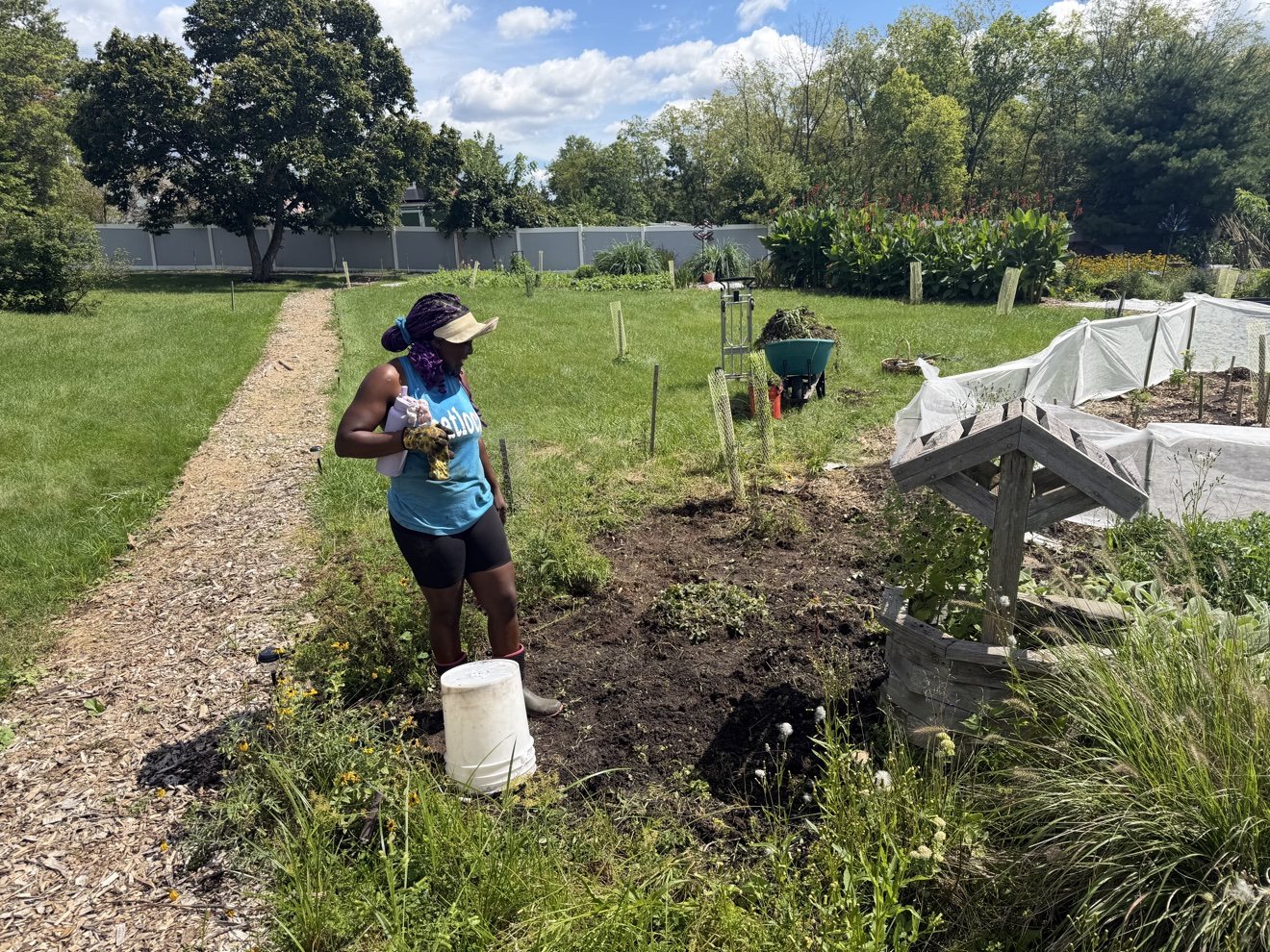
Jerneice carrying a bucket while working among the garden beds
Field Note 06 Building it as we go.

There is a version of this story that would be easy to package.

A grueling corporate career. Three acres of land. A realization that modern life had lost something important. Then a clean break and a new beginning among rows of vegetables.

That is not what happened.

There was no grand plan to build Just One More Farms. There was a garden project. Then another. We planted trees. We grew more food. We converted lawn into habitat. We started paying closer attention to the wildlife already living here. We learned one skill and became curious about another.

None of it seemed particularly transformational on its own.

That is the strange thing about gradual change. You can be in the middle of it without realizing how far you have traveled.

HolmeStyle Foods had already been operating on the property since 2022. As our gardens expanded, we began reorganizing the kitchen garden around what could support HolmeStyle Foods. Growing food made us think differently about soil. Paying attention to plants made us notice insects. Wildlife made us question the amount of lawn seemingly everywhere. One question kept quietly rearranging the answer to another.

Meanwhile, curiosity kept spilling beyond the garden.

If we could grow this, could we preserve it? If we could repair that, what else could we stop replacing? Could we make soap, roll candles, learn pottery or woodworking? Could an outbuilding become a botanical studio? Could these three acres support food, wildlife, craftsmanship, hospitality and experimentation without forcing any of them into separate boxes?

Eventually, what looked like a collection of unrelated projects stopped feeling unrelated.

That was the real discovery.

We did not escape modern life to become farmers. We are still deciding what being farmers means here. We are building a place where growing food can sit beside restoring habitat, making things, supporting HolmeStyle Foods, learning old skills, using useful new technology and following questions simply because they are interesting.

Just One More Farms officially began in August 2026, but it had been taking shape long before we gave it a name.

That matters to us because meaningful change is often presented as something dramatic. Quit the job. Sell everything. Move somewhere else. Become someone new.

Our experience has been quieter.

One useful change survived long enough to make another possible. One discovery altered the way we saw something familiar. Eventually, enough small decisions accumulated that the life around them began to look different.

There is no finished version waiting at the end. We are building it as we go.

That is not a disclaimer.

It is the method.

Next: Look Closer

← All Field Notes
Field Note 07

Look Closer

Attention is where all of this begins.

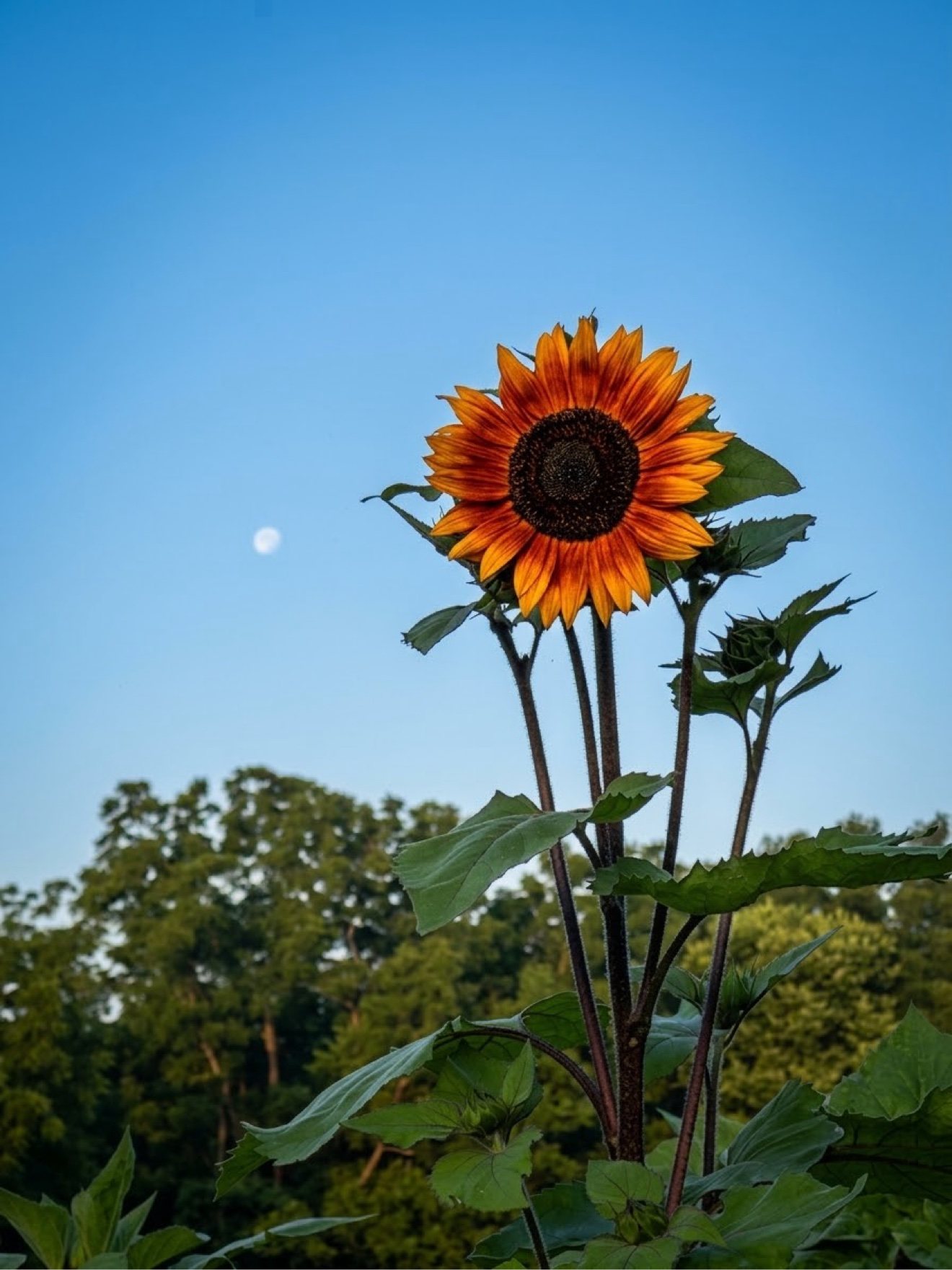
An orange sunflower beneath a pale moon in a blue sky
Field Note 07 The moon showed up, too.

At its core, Just One More Farms is not about “farming”.

It is about attention.

Almost everything we are doing here began when we noticed something we had previously overlooked.

Water pooling in one corner. An insect we had never seen before. A plant appearing where we did not put it. An animal returning after habitat changed. A vegetable tasting completely different from the version we were accustomed to buying. An old object revealing how it was made once we stopped seeing it simply as something broken.

The world is constantly giving us information. The question is whether we are paying attention long enough to receive it.

Attention can sound passive. In practice, it governs what we do.

Notice where water collects before deciding what to plant. Watch an insect before deciding it is a pest. Pay attention to what wildlife is eating before deciding how to share the land. Look at something broken long enough to understand why it failed before replacing it.

Curiosity follows naturally.

Why does that grow there? What made that hole? Where does this bird go at night? Who first figured out how to preserve food this way? Why are we buying something we could make? What happens if we stop mowing that?

And then comes wonder.

Not wonder manufactured for effect. The real kind.

A seed smaller than your fingernail becomes enough food for dinner. A caterpillar disappears and emerges with wings. An animal chooses a corner of your property to raise its young. A meadow emerges where turf once grew. Clay dug from the earth becomes something held in your hands for generations.

Reality is astonishing enough when we actually look at it.

Somewhere along the way, adults are often taught to stop being impressed by “ordinary” things. Curiosity becomes acceptable only when it is productive, specialized or attached to a useful outcome.

We are trying to unlearn that.

Not every question needs to accomplish something. Sometimes you learn the name of the plant you have walked past for years.

Nothing has changed about the plant. But something has changed about the walk.

That is why none of this requires three acres.

Attention works anywhere.

A windowsill. A neighborhood walk. A repaired chair. A recipe with a history. A bird outside the window. A question you follow simply because you want to know the answer.

We are not inviting anyone to live like us. We are inviting people to notice more of the life they already have.

Look closer.

Try something.

Learn something.

See where it leads.

And when one discovery inevitably invites another, you realize there is always just one more.

Return to all Field Notes